

I’m gonna be honest, this article is more manifesto than memoir. I’d just like to describe an aspiration that’s been brewing in me for a while— something I’ve only begun to dip my toe into, but would love to someday be able to swim in.
Basically, I’d like to start getting more comfortable with being uncomfortable. Sitting within my own tension allows me to look at things critically, including myself, and what makes me tick. (Important to note: when I say “critically,” I don’t necessarily mean negatively/unkindly; I mean it more as an effort at understanding, at seeing the gears at work underneath the larger behavioral machine.)
Let’s face it, it would be an understatement to say that growth isn’t a comfortable process. Discomfort is often a pre-requisite for growth, a rite of passage as you outgrow that which doesn’t serve you anymore. It’s proof of life. It’s human.
Safety vs. Self-Sabotage
Just as discomfort is human, though, so, too, is the avoidance of discomfort— courtesy of that primal, caveman part of the brain that wants you to be safe… but not necessarily happy.1 Trusting your instincts is important, but so is looking for the root of those instincts. For example, sometimes it’s worth overriding an instinct to avoid, if you recognize that the root of that instinct is your brain simply trying to repeat the patterns it recognizes. Oftentimes, the subconscious’s understanding of the word “safe” leans more toward “familiar,” rather than “free from danger.” In other words, the brain, when left unchecked, will consistently subscribe to the “Better the devil you know than the devil you don’t” philosophy. This is something that can often lead a person into the same destructive or abusive patterns, simply because their brain knows and understands them, and to avoid embarking on the scariness of the unknown, the new.
“The brain’s job is to keep you alive. Not make you happy or well behaved. And it is obsessed with doing its job well.”
―Devina King, Surviving To Thriving: The Art and Science of Guiding Children To Develop Behavioral Regulation
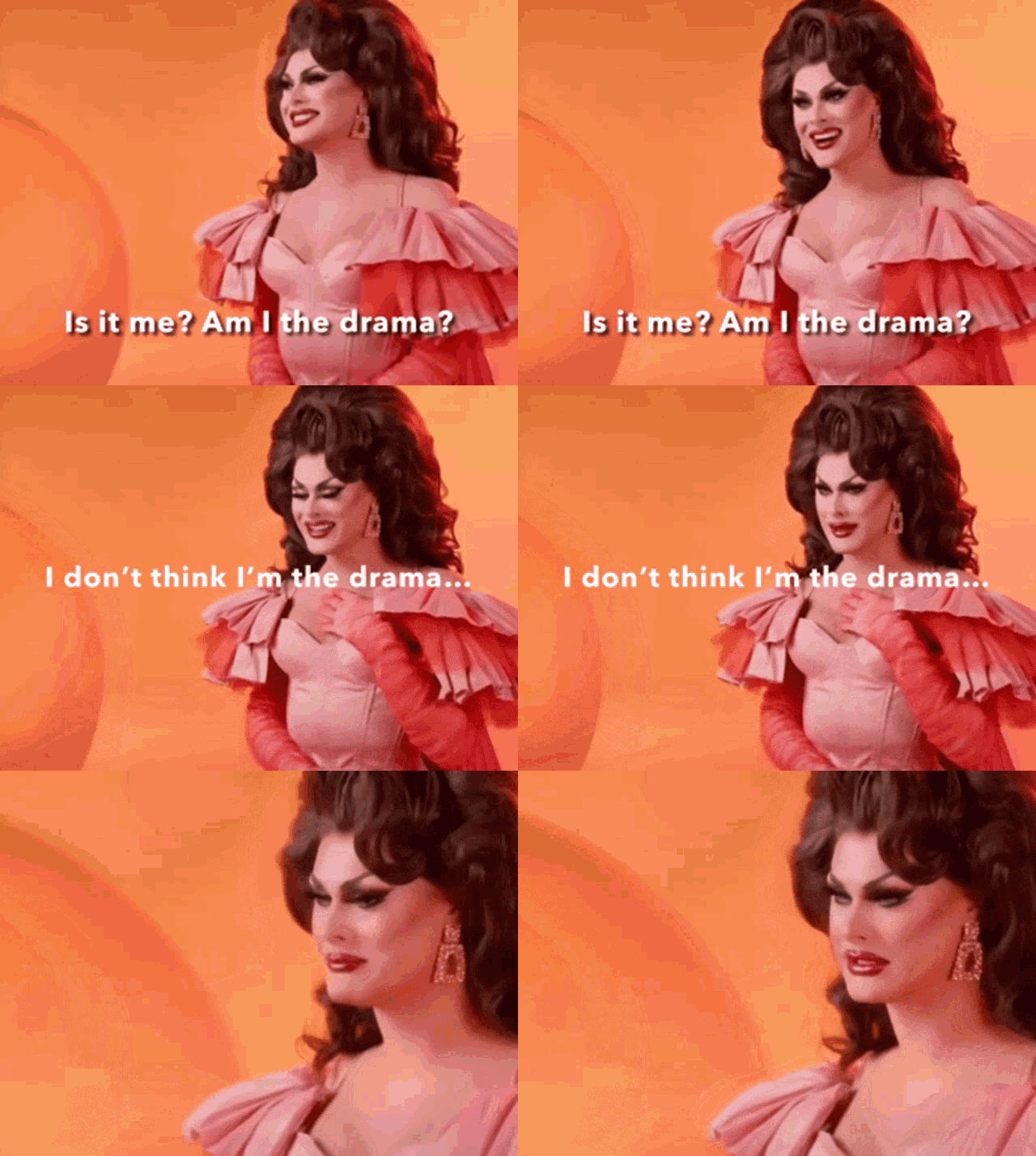
![DoubleBlak [The case of the Phantom Device Usage]](https://substackcdn.com/image/fetch/$s_!giUQ!,f_auto,q_auto:good,fl_progressive:steep/https%3A%2F%2Fsubstack-post-media.s3.amazonaws.com%2Fpublic%2Fimages%2F891de6ce-aad2-4fb0-9752-9d9c6750772b_469x357.gif "DoubleBlak [The case of the Phantom Device Usage]")
Not gonna lie, I get spooked whenever I realize that what I thought were well-reasoned decisions on my part were actually just the product of unchecked shadow work. That peeling back the mask on certain decisions reveals the true culprit: my own subconscious.

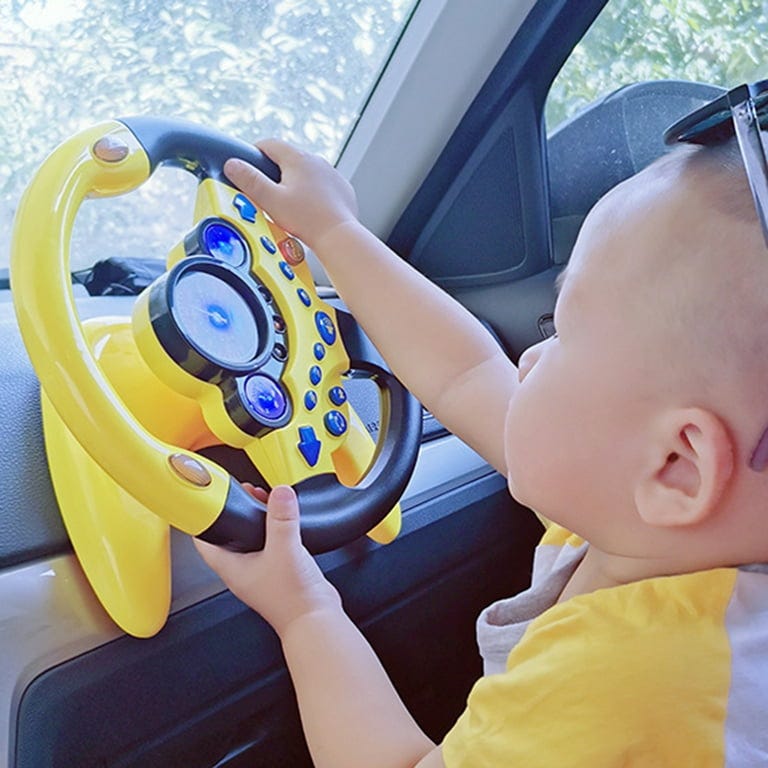
The feeling when you realize that what you thought was keeping you safe— keeping you from getting hurt, acting for your own well-being— was actually the thing hurting you? It’s unsettling, to say the least. There you were, thinking you were consciously making healthy, unbiased decisions for your greater good, that your hands were locked in at 10 and 2 on the wheel, mirrors checked, foot on the pedal, when, in reality, you’d been merely gripping a kid’s toy steering wheel in the backseat, and your subconscious had been driving all along.
Noticing when this phenomenon is at play has felt like suddenly catching a thief in the dead of night with a spotlight, or even like when the troublemaker in class is caught and reprimanded, but everyone knows they’re going to get right back to wreaking havoc as soon as the teacher faces the board again. The usual suspects of emotional responses arise: Horror. Shock. Awe. Disbelief. But also, maybe, just maybe, a little begrudging acceptance of its inevitability.

It’s when you start to embark on the new, take your personal road less traveled, or push yourself out of your comfort zone, that you start to feel that tension, your nerves pulling taut as the subconscious caveman brain cautions you against it. That part of your brain wants you to believe that it knows the best path— you know, that trusty one it’s traveled the most and knows oh-so-well— and that, honestly, there isn’t any other viable option anyway. What your subconscious doesn’t want you to realize is that, if you were to recognize its desperation for what it is, and instead pause to look around, you’d discover that you’ve actually approached a crossroads. That there is a way to seize control— to choose your path— after all.
I’m trying to pay more attention to the moments when I feel uncomfortable, when I’m stuck in a rut, or when I’m feeling a strong, seemingly unexplained impulse. Beyond that, though, I’m then trying to examine the why that’s at play, behind the scenes.
Watching the show Couple’s Therapy last year and starting the new season this year has, for me, been an exercise in therapy via osmosis— an opportunity to learn from others’ experiences and challenges, thanks to the different couples’ vulnerability in each season. The therapist, Orna, often guides the participating couples to discover how old patterns might be repeating, how they might be recreating their parents’ relationships, etc. She challenges them to not simply answer “I don’t know” to a difficult question— or one they hadn’t considered before— but rather to seek an answer, to sit with the tension that arises, and to examine what comes up.
An extension of this overall conversation is the breaking of generational patterns and trauma chains. Certainly not a comfortable or easy experience, and not one that will win you favor with many family members, but a valuable and often necessary one, nonetheless.
Not only does examining your own discomfort help you individually, but it also helps you be a better and healthier friend, family member, etc. So maybe we should all get a little more comfortable with some discomfort. With sitting with a friend who’s hurting, and not trying to solve that which can’t be solved. With letting things be done the way you wouldn’t have done them. With releasing your grip on control. With stepping up when you want to shy away. With asking for the promotion. With talking to a stranger. With asking for the things you want. With setting boundaries that other people might not be thrilled about. Who knows, maybe enduring all those growing pains is necessary in order to achieve… well… growth.
Being in the Wrong
Part of sitting in my own tension, getting comfortable with being uncomfortable, is acknowledging the gray area of my own morality, history, and identity. After all, where is the true value in shutting down any possible valid critique of yourself, besides simply avoiding discomfort? I’m trying to look back at events in my past, and allow myself to see the things I had done wrong or opinions I had once held but now disagree with for what they are, without letting my perception immediately slip to the extreme of suddenly labeling myself the “villain.” Viewing yourself in black and white is a quick way to either (a) continue falling deeper into self-brutality and hopelessness, or (b) trigger a reactionary pendulum swing back to the other extreme of refusing to acknowledge ever having been in the wrong. Both alternatives result in stagnancy, with no opportunity for true personal growth or progression. So… where is the path forward? From what I can tell, it resides in neither the black nor the white, but rather, somewhere in the gray.
Learning to sit with being the person in the wrong is so deeply difficult and uncomfortable. Immediately, I want to speed-run any potential solutions in order get to a place where I’m not in the hot seat anymore. But perhaps part of the work is owning that discomfort, carrying it, and learning to shapeshift and adjust my perception of myself to account for the new information it reveals. That way, I can allow myself a little more humanity. Permit myself to be fallible.
“No Pain, No Gain”
There’s a lot to be said for proving to yourself that you’re capable of something difficult. In an effort to provide/explore somatic therapy, I started doing yin yoga about a year ago, which is a slow style of yoga that utilizes supports so that you can hold poses for longer periods of time. The practice is quite literally about proving to yourself that, yes, you can in fact do hard things. You can sit in your own discomfort for prolonged periods of time. You are the one in the driver’s seat, and there is value in both what sitting in the tension communicates to yourself subconsciously (i.e. “you are worthy of the effort”) and what you actively discover through the practice. It’s only by sitting in the tension of that pose that you can then relax further into it, can release some of that tension, and can become more limber, and, by extension, open to growth.
How interesting is it that, even in an article about sitting in one’s own tension, I’m so quick to start generalizing and distancing the conversation from myself? Granted, part of this is due to the medium and the awareness of an audience, but I think a good portion of it has to do with an avoidance of difficult emotional/behavioral work.
Much like with grief, it can sometimes be easy to get caught up in the theory and the symptoms, to distract from the pain and reality of the loss.
I’ve had to go back and retrace my steps after writing some sections, changing some general uses of the word “you” to “me,” to re-examine and bring the conversation back to my personal experience, and not simply write about theory, not just talk around the topic and experience.
I think the vulnerability required to write these articles with my own experience in mind is yet another instance of needing to be comfortable with being uncomfortable.
Putting yourself out there inevitably causes anxiety, at least for me. The anxiety spiral of preparing for the worst case scenario/wanting to take things back/regretting neutral actions is less often a response to true danger, and more often a response to stepping outside the comfort zone. The challenge, therefore, becomes recognizing the impulse to veer into anxiety for what it is, and then telling yourself that, actually, it’s okay to feel a little awkward. To be vulnerable. To put yourself out there. It’ll be good for you.
The Postscript
I just wanted to provide a little insight into why this has been on my mind lately. Grief has restructured so much about me, including my relationship with time and my perception of priorities. It’s surreal, and it feels like now my time is measured in days, months, years since my dad’s passing. My dad died on April 14, 2025, and it seems that, now, late April to mid May has become my new January. It feels like second-nature, subconscious, obvious even, to be taking a second now to examine the past year, look down at where my feet are planted to take a litmus test of my present moment, and look with some potential resolve to the year ahead. Side note, but I keep forgetting that other people aren’t starting their year right now, too. That this isn’t the time that everyone else is also talking about New Year’s Resolutions. I’ll see a goal-setting post and be like, “Well yeah, it’s that time of year.” But… it’s not. Not for most people.
A lot of things have come to mind over the course of the past year— the concept/rough draft for this article, for example, was started a few months ago— but it’s only now that those thoughts, goals, etc. seem to be gathering some weight, stepping to the forefront of my mind in a slightly more tangible, determined way.
Year 2 has already had a different energy to it. Initially, it was marked by a lot of fear of the grief, of the sheer enormity of it. But, likely as a direct response to that fear, I’ve been also noticing a trend within myself of wanting to grow in spite of that, of wanting to reach goals— of even wanting in the first place. Maybe it’s inherent in the timing, looking back at the first year after a major loss, and feeling like nothing happened since then, like you’ve stayed the same, almost in a paralysis, as the world has continued spinning. It feels very Rip van Winkle. Conversations I’ve been meaning to continue, and things on my mind from a year ago are popping back up again, almost as if no time has passed at all. There’s a simultaneous floating, “time-isn’t-real” feeling that accompanies a bone-chilling existential undercurrent of terror when I face the not-so-simple fact: An entire year has gone by. And I’ve stayed… still? I know it’s not exactly the case, that a lot has happened in the interim, that I’ve grown and learned more about myself and the world around me, etc., etc. But that’s not as easy to keep in mind when you zoom out like this. It feels like being in the middle of a conversation with someone, looking away briefly to consider their question, and then, as you start to turn back to them with your answer, you realize they’re gone. The room is empty, no one’s been in there for months. You’ve lost time. Maybe you’ve lost your mind?
At the same time, all of this sparks a quasi-quest in you: to act with more intentionality, to find meaning, to find purpose, to do something with the next year, with the time you have.
Which is all well and good, but let’s not forget: You’re still in that empty room, hanging on to the end of a conversation that was long abandoned, feeling wrong and spooked out, and not sure how to get your bearings. This is why I’m being so loose with and adding disclaimers in my language around goals, intentions, quests, etc. It’s difficult to set concrete goals in a still-vulnerable state, to try to build a permanent, or long-standing structure on ground that has proven itself time and again— for over a year— to be constantly shifting. It’s difficult to trust that said ground would remain steady for long enough to even estimate a topographical map for planning a blueprint, let alone constructing a foundation.
All of this to say, it’s nice to feel like I’m at a place in my life/grief journey where I’m even able to look a few feet ahead of me, to try to do things for myself, set goals for myself. To plan. To strive. To grow. But I’m also trying to be kind to myself, to recognize that this might need to be a slow process, to prepare for the likely possibility that a goal built on a terrain of grief might, like the grief itself, not end up taking a linear path. That, sure, it would be easier, more comfortable, for things to be straightforward, streamlined, fast. But the slow process is equally valuable. The growth is worth the discomfort.